The planets
The actors in every birth chart: ten planets, Chiron and three calculated points. New to planets? Start below the cards.


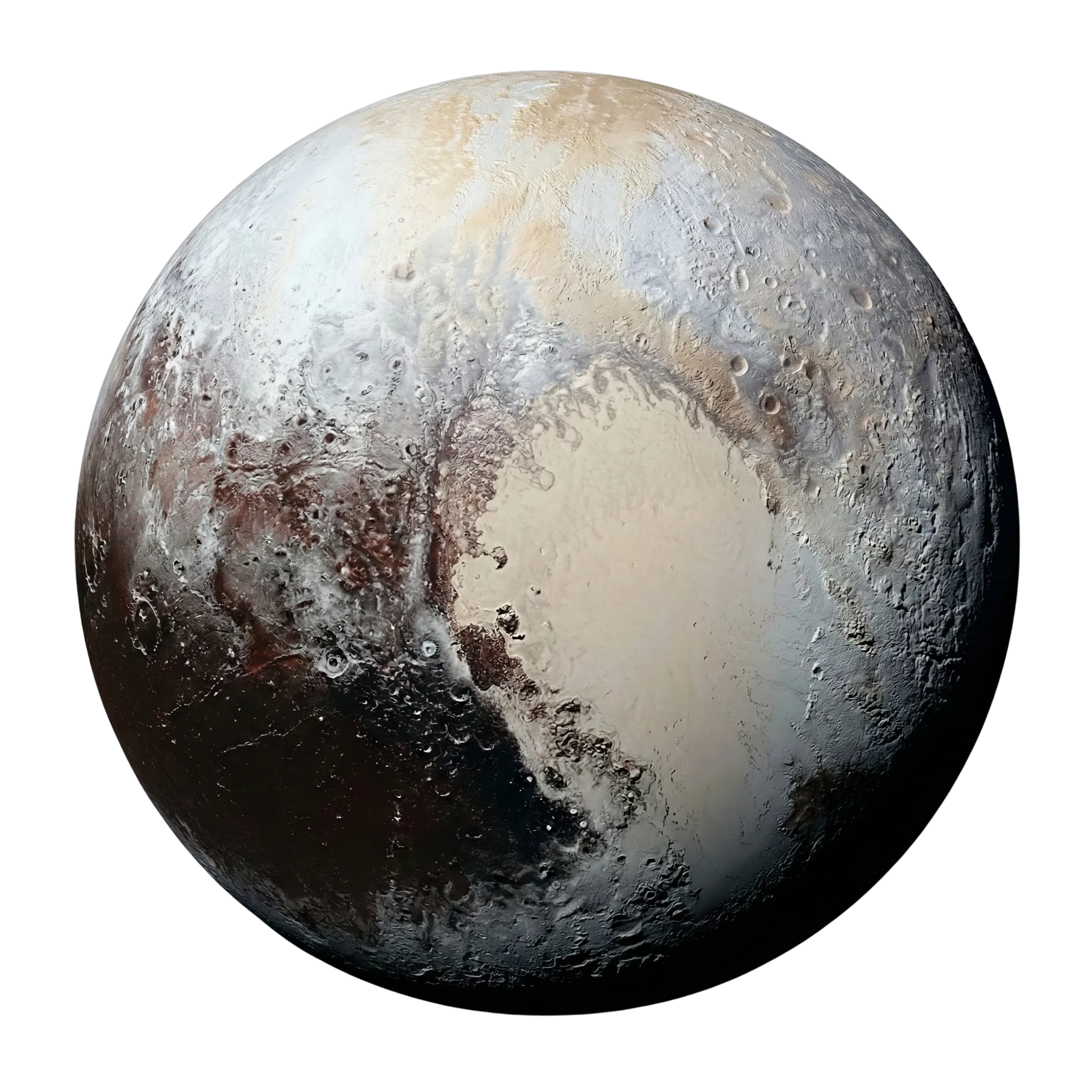
Chiron and the calculated points
Chiron is a small icy body orbiting between Saturn and Uranus. The North and South Nodes and the Part of Fortune are calculated points with no size or mass, read alongside the planets for centuries.
What the planets do in a chart
A birth chart is a map of where the Sun, the Moon and the planets were, seen from the place and moment you were born. Each planet stands for one part of life: the Sun for identity, the Moon for feelings and needs, Mercury for thinking, Venus for love and value, Mars for drive, and so on. The planets are the actors in the chart. Everything else describes how and where they act.
- The planet says what. Venus is about attraction, pleasure and what you value.
- The sign says how. Venus in Taurus loves slowly and loyally; Venus in Gemini loves through conversation and variety.
- The house says where. Venus in the 10th house often brings that warmth into work and public life.
- Aspects say with whom. An Opposition or a Trine links Venus to another planet, and the two start to work as a pair.
Put together, a single placement reads like a sentence: "Venus in Taurus in the 10th, trine Saturn" becomes "a steady, loyal way of loving and valuing, shown through work, supported by patience and commitment." Every planet page below teaches you to write sentences like that.
Lights, personal, social and outer planets
Astrologers group the planets by how fast they move. Fast planets change sign often, so they describe what is most personal about you. Slow planets stay in a sign for years, so everyone born around the same time shares them, and they speak more about a generation until they touch your personal points.
The two lights
The Sun and Moon, also called the luminaries. They are the centre of the chart: purpose and identity, feelings and needs. Neither ever goes retrograde.
Personal planets
Mercury, Venus and Mars. They change sign within weeks and describe how you think, love and act day to day.
Social planets
Jupiter and Saturn. They move through a sign in one to three years and describe how you grow, commit and take your place in society.
Outer planets
Uranus, Neptune and Pluto, discovered since 1781 with telescopes. They stay in a sign for many years and describe collective change, made personal by house and aspects.
Bodies and calculated points
Eleven entries on this page are real objects you could, in principle, point a telescope at: the Sun, the Moon, the eight planets astrologers use, and Chiron. Chiron is a small icy body about 200 km across, discovered in 1977 and classed by astronomers as a centaur because it orbits between Saturn and Uranus.
The other three are calculated points with no physical body. The North Node and South Node are the two places where the Moon's path crosses the Sun's, always exactly opposite each other, and eclipses happen near them. The Part of Fortune is a Hellenistic lot, calculated from the Sun, the Moon and the rising degree. They have no size or mass, but astrologers have read them for centuries, and each has its own page.
Real objects in the sky
Eleven bodies with size and mass, Chiron included

The fourteen at a glance
| Body or point | What it describes | Rules (traditional / modern) | Full cycle |
|---|---|---|---|
| Sun | Identity, vitality, purpose | Leo | One year |
| Moon | Feelings, needs, belonging | Cancer | About 27 days |
| Mercury | Thinking, speech, learning | Gemini, Virgo | About one year |
| Venus | Love, value, pleasure | Taurus, Libra | About one year |
| Mars | Drive, desire, courage | Aries, Scorpio / Aries | About 2 years |
| Jupiter | Growth, meaning, generosity | Sagittarius, Pisces / Sagittarius | About 12 years |
| Saturn | Structure, time, responsibility | Capricorn, Aquarius / Capricorn | About 29.5 years |
| Uranus | Change, freedom, invention | None / Aquarius | About 84 years |
| Neptune | Imagination, longing, dissolving | None / Pisces | About 165 years |
| Pluto | Power, depth, transformation | None / Scorpio | About 248 years |
| Chiron | Sensitivity, repair, teaching | No agreed rulership | About 50 years |
| North Node | Direction and growth | No rulership | About 18.6 years, backwards |
| South Node | Familiar gifts and release | No rulership | About 18.6 years, backwards |
| Part of Fortune | Circumstance, body, well-being | No rulership | Moves with the rising sign, daily |
A reading order for beginners
- Start with the lights: the sign and house of the Sun and the Moon, and the sign rising on the 1st house cusp.
- Add the personal planets, Mercury, Venus and Mars, for how you think, love and act.
- Find the ruler of your rising sign. Wherever that planet sits is a theme for the whole life.
- Read Jupiter and Saturn by house: where you grow easily and where you build slowly.
- Bring in Uranus, Neptune, Pluto and Chiron mainly when they sit on an angle or closely aspect a light or personal planet.
- Finish with the North Node axis and the Part of Fortune as refinements.